

Loyalty programs occupy a strange place in restaurant marketing: nearly everyone has one, and almost nobody measures whether it works. The honest answer is that restaurant loyalty programs work when they change behaviour and waste money when they don't. The difference is entirely in the design.
Key takeaways
- A program only pays off if it lifts frequency or spend — not if it rewards existing habits.
- Target 3–7% of spend returned; measure against increased visits.
- Digital points beat punch cards because they identify the customer.
- Exclude third-party app orders — reward the channels you own.
- Make the first reward reachable in roughly 4–6 visits or nobody engages.
What you're really buying
Two things: frequency and identity.
Frequency is the obvious one. A guest who visits twice a month instead of once is worth twice as much, and moving even a fraction of your regulars up a notch outperforms most advertising you could buy.
Identity is the underrated one. A punch card tells you nothing about who your customers are. A profile tied to a phone number tells you who orders what, how often, and — critically — who has stopped coming. That's the raw material for everything else in marketing.
When loyalty programs fail
Be clear-eyed about the failure modes:
| Failure | What it looks like | Fix |
|---|---|---|
| Rewarding existing behaviour | Regulars get discounts, visits unchanged | Set rewards to require an extra visit |
| Reward too distant | Low redemption, low engagement | Shorten the path to first reward |
| Too complicated | Staff can't explain it in a sentence | Simplify to one rule |
| No enrolment push | Under 20% of sales attached to a profile | Train the counter pitch |
| Never measured | Nobody knows if it works | Track three metrics quarterly |
Choosing a structure
Points per dollar suits most restaurants: it scales with spend, works across a varied menu, and is easy to explain. Earn 1 point per $1; 100 points = $5 off.
Visit-based (every 10th coffee free) suits high-frequency, low-ticket venues like cafés, where the ritual matters more than the amount.
Tiered suits high-volume restaurants with a large regular base, where status perks (priority booking, early access to specials) motivate more than small discounts.
Punch cards suit almost nobody in 2026 — they cost you the customer relationship in exchange for simplicity you can get digitally anyway.
Setting the value so it pays
Start from what an incremental visit is worth. If your average cheque is $40 with a 65% gross margin, an extra visit contributes about $26. Spending $2–$3 in rewards to generate it is excellent business. Spending $2–$3 on a visit that would have happened anyway is not.
The practical target most operators land on: 5% of spend returned, with the first reward reachable in four to six visits.
Running it in SeroPOS
Loyalty is built in rather than bolted on:
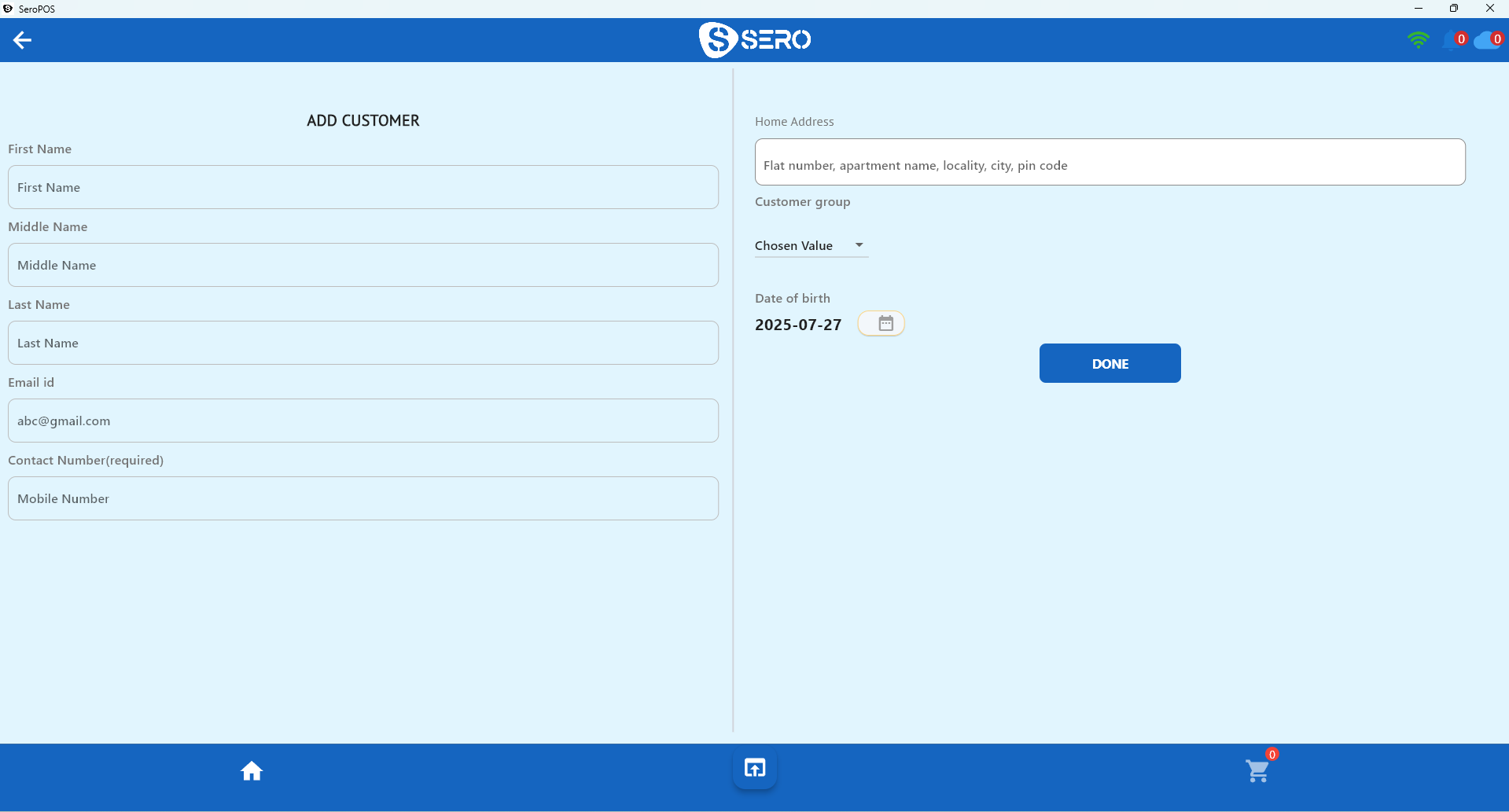
- Customer profiles — name, phone, group, birthday; lookup by phone at the counter
- Reward points — accrue on sales, redeem as part of payment
- Works alongside discounts and split payments on the same order
The enrolment pitch is the whole game
The program design matters far less than whether people join. Compare:
- ❌ "Would you like to join our loyalty program?"
- ✅ "Want points on this? Just your phone number — that's you a quarter of the way to a free main."
The second works because it's concrete, low-effort, and shows proximity to the reward. Print balances on receipts so progress stays visible, and mention it during online and QR orders where enrolment can be automatic.
Use loyalty against delivery-app commissions
This is the strategic play. Third-party apps rent you customers at 20–30% per order and keep the relationship. Loyalty is how you buy it back at a fraction of the price:
- Include a card or QR sticker with every app delivery
- Offer points only on direct orders
- Make direct ordering at least as easy as the app
A 5% loyalty give-back that converts an app customer into a direct customer is a 15–25 point margin improvement on every subsequent order.
Measure these three things
- Enrolment rate — share of transactions attached to a profile. Under 20%? Fix the pitch.
- Frequency change — are enrolled guests visiting more than they used to?
- Redemption rate — near-zero redemption means the reward is unreachable and motivating nobody.
Your sales reports give you the sales side; customer profiles give you the rest.
Keep it simple enough to explain
If your program needs a table to describe, simplify it. One rule, one reward, one sentence — that's what a busy server can pitch and a distracted guest can understand.
Loyalty, customer profiles and reporting are all included in SeroPOS. Download it and switch loyalty on during your 14-day free trial.