Pizza is a habit business. The same family orders most Fridays, and the shop that owns that habit wins. A well-designed pizza loyalty program nudges an occasional customer into a weekly one — but a badly designed one just hands discounts to people who were coming anyway.
Key takeaways
- Digital points beat punch cards: they identify the customer and survive a lost wallet.
- Target 3–7% of spend returned as rewards — enough to notice, not enough to hurt.
- Reward direct orders only so loyalty pulls customers off commission-charging apps.
- Make the first reward feel close — signup rates depend on perceived proximity.
- SeroPOS has loyalty points built in, tied to customer profiles, redeemable at checkout.
What you’re actually buying with a loyalty program
Not gratitude — frequency. If a customer who orders twice a month starts ordering three times, their annual value rises by 50%. Across a few hundred regulars, that’s transformational for a pizzeria, and it costs far less than acquiring the equivalent number of new customers.
The second thing you’re buying is identity. A punch card tells you nothing. A customer profile tells you who orders what, how often, and when they stopped — which is the raw material for everything else you might do in marketing.
Choosing a structure
| Model | How it works | Best for |
|---|---|---|
| Points per dollar | Earn X points per $1, redeem for credit | Most pizzerias — flexible, scales with spend |
| Buy N get one | Every 10th pizza free | Simple menus, easy to explain |
| Tiered | Silver/Gold with better perks | High-volume shops with many regulars |
| Punch card | Physical stamps | Only if you truly can’t run digital |
For most pizza shops, points per dollar is the right default: it rewards the family ordering three pizzas more than the person grabbing a slice, and it doesn’t collapse when someone orders wings instead of pizza.
Setting the value
The arithmetic that keeps you profitable:
- Decide your give-back rate — say 5%.
- With points at 1 point per $1 and 100 points = $5 reward, a customer spending $100 earns $5 back. That’s 5%.
- Check it against your food cost. If the reward is a free pizza costing you $6 in ingredients, make sure it’s earned only after enough spend to comfortably cover that.
Then check the feeling: a reward that takes 15 orders to reach is invisible. Aim for a first reward within roughly 4–6 typical orders so new members can see the finish line.
Running it in SeroPOS
Loyalty is built into the platform rather than bolted on:
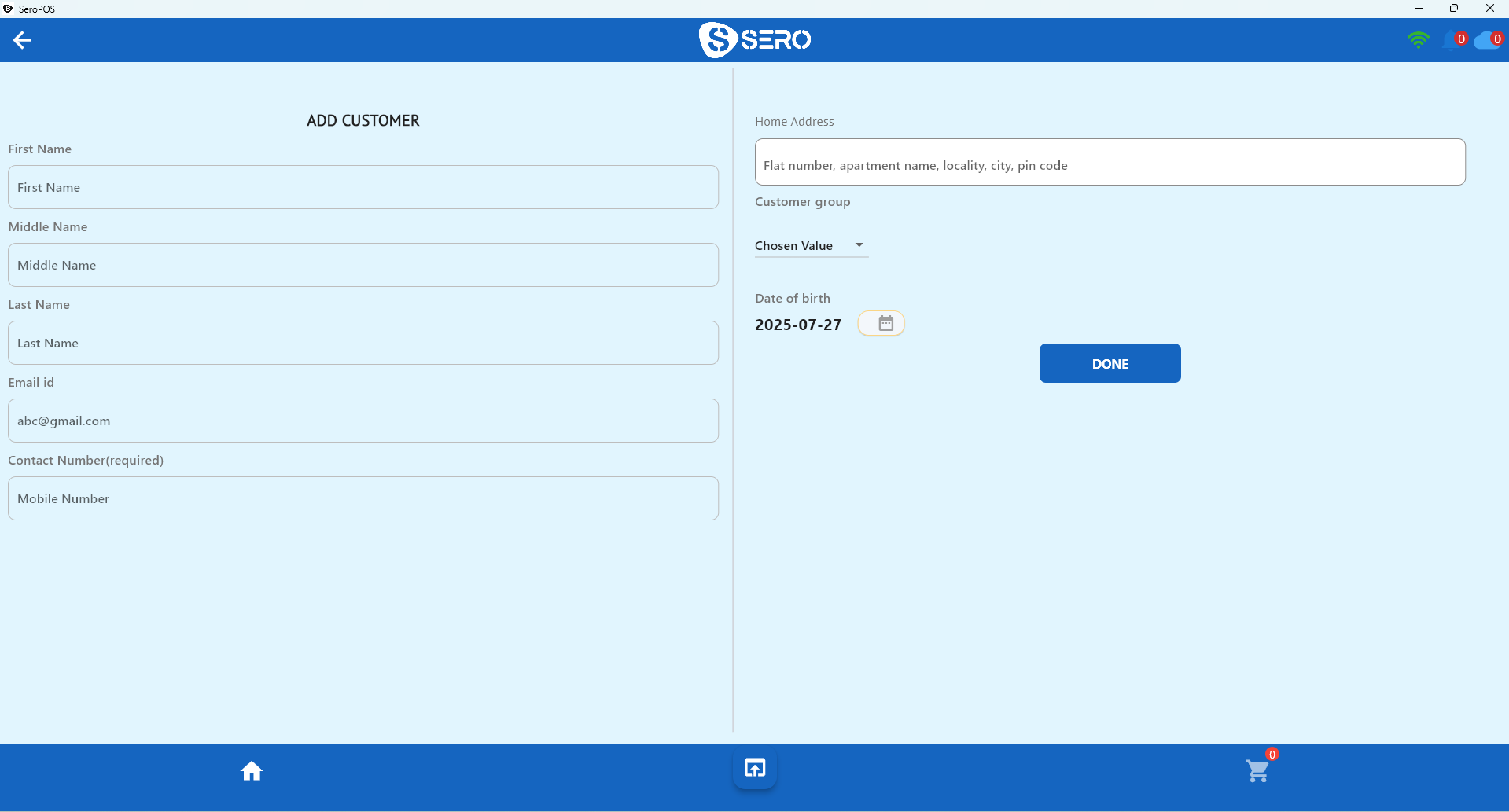
- Customer profiles hold contact details, groups, and birthdays — staff can look a customer up by phone number in seconds.
- Reward points accrue on sales and can be redeemed as part of payment at the counter.
- Points work alongside discounts and split payments on the same order.
Getting people to actually join
The signup pitch matters more than the program design. Bad: “Do you want to join our loyalty program?” Good: “Want points on this? Just your phone number — that puts you a third of the way to a free pizza.”
Other tactics that work:
- Enrol at payment, not at ordering, when the customer isn’t deciding anything else.
- Print the balance on receipts so progress is visible.
- Mention it on the phone and in AI phone orders.
- Put it on the box. A sticker on every delivery reaches customers at home.
- Auto-accrue on direct online orders so there’s no friction at all — see commission-free online ordering.
Use loyalty as a weapon against app commissions
This is the strategic move most pizzerias miss. Delivery apps own the customer relationship; loyalty is how you take it back. Make the pitch explicit on flyers included with app deliveries:
“Order direct next time — same pizza, plus points toward a free one.”
Since a direct order saves you 20–30% commission, even a generous 7% loyalty give-back leaves you far ahead. You’re effectively buying customer relationships at a quarter of what the apps charge to rent them.
Measuring whether it’s working
Track three things quarterly:
- Enrolment rate — what share of transactions are attached to a customer profile? Under 20% means your counter pitch needs work.
- Repeat frequency — are enrolled customers ordering more often than they used to?
- Redemption rate — if almost nobody redeems, your reward is too far away and the program isn’t motivating anyone.
Your reports show sales by customer and by period, so these are answerable without a spreadsheet. Pair the numbers with your food cost work to confirm the program is funded by increased frequency rather than eroded margin.
Keep it simple
The best pizza loyalty program is one your 17-year-old counter staff can explain in one sentence and your busiest customer understands instantly. If you need a table to explain the rules, simplify.
Download SeroPOS and switch on loyalty during your 14-day free trial — no credit card required.