Retail POS systems assume you buy things and sell them. A bakery does something harder: it buys flour and sells croissants, having converted one into the other at 4am while guessing how many people will walk in. A proper bakery POS system has to handle production, not just transactions.
Key takeaways
- Bakeries need recipe-based costing — a true cost per loaf, not a guess.
- Ingredient-level stock deduction shows real flour, butter and sugar usage.
- Track end-of-day waste by product — it's your production-planning data.
- Record custom orders with deposits in the system, never in a paper book.
- Handle café service and retail shelves in the same platform.
Recipe costing: the number most bakeries don’t have
Ask a baker what a sourdough loaf costs to make and you’ll usually get an estimate. Ingredient prices move constantly — flour, butter and eggs have all swung sharply in recent years — and a menu price set two years ago may now be barely above cost.
Recipe management fixes this. Define each product’s ingredients and portions once:
| Component | Portion | Cost |
|---|---|---|
| Flour | 500 g | $0.62 |
| Water, salt, starter | — | $0.05 |
| Labour/energy (allocated) | — | (track separately) |
| Packaging | 1 bag | $0.14 |
| Ingredient cost | ~$0.81 |
Sold at $7.50, that’s a healthy margin — but when flour jumps 20%, you’ll know immediately rather than a year later. On the SeroPOS Pro plan, recipe management updates costs automatically when ingredient prices change, and deducts ingredient stock as products sell.
The wider method is in food cost percentage.
Production planning from real data
The daily bakery question is “how many do we make?” Yesterday’s guess plus optimism is the usual method. Better inputs:
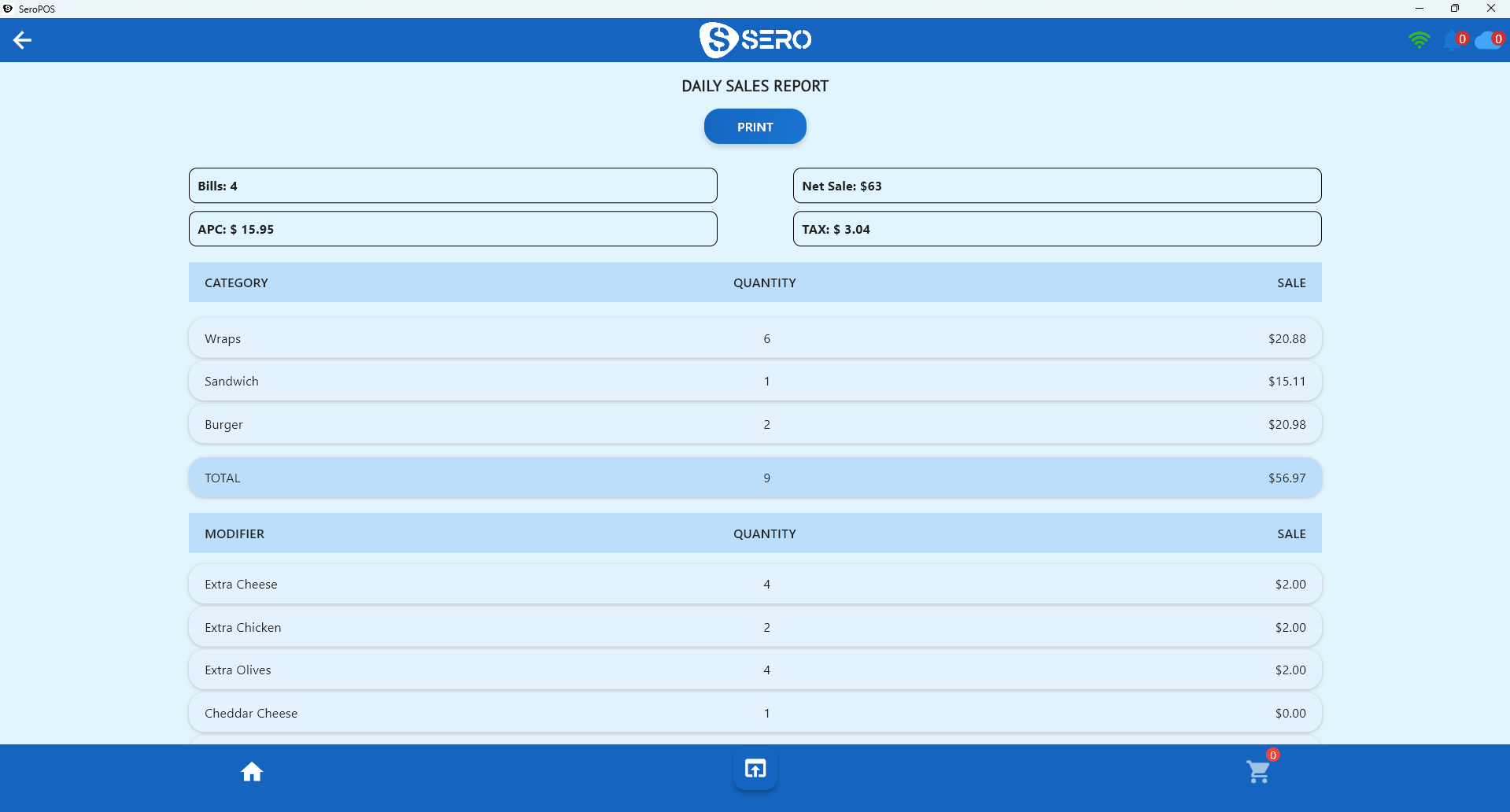
- Sales by product by weekday — Saturdays aren’t Tuesdays
- Waste log by product — what you consistently over-produce
- Trending products — what’s rising over recent weeks
- Pre-orders — known demand before you start
Custom cake and special orders
Custom work is high-value and high-risk: get the date, spelling or allergy note wrong and you’ve lost a customer and a cake. Keep every order in the system with:
- Customer name and phone
- Full specification, including allergens
- Deposit taken and balance due
- Collection date and time
- Any reference photos
A record anyone in the shop can look up beats a notebook only one person can read.
The counter and the shelves
Most bakeries run three businesses at once, and the POS should cover all three:
| Side | What you need |
|---|---|
| Counter service | Fast entry, modifiers for coffee, loyalty |
| Retail shelves | Barcodes, variants, stock counts on packaged goods |
| Wholesale/orders | Customer groups with wholesale pricing, purchase orders, invoices |
SeroPOS handles all three in one subscription rather than requiring a café system plus a retail system.
Waste: the number that pays for itself
Bakery waste is structural — you bake ahead, and unsold product doesn’t keep. That makes it forecastable, and therefore reducible.
Log it by product for a month and patterns appear immediately: the pastry you make 24 of and sell 15 of, every single day. Cutting that batch to 18 costs nothing and stops the loss.
Consider also a discount routine for the last hour, and a plan for day-old stock — both turn certain waste into partial revenue.
Cost of a bakery setup
| Item | Cost |
|---|---|
| Tablet or PC (owned) | $0 |
| Receipt printer | $150–$400 |
| Label printer (packaged goods) | $150–$400 |
| Barcode scanner | $30–$120 |
| Cash drawer | $80–$200 |
| SeroPOS Pro (recipes) | $50/month |
The Pro plan is the right tier for a bakery specifically because recipe management is where the margin control lives.
Download SeroPOS and set up your recipes during the 14-day free trial — no credit card required.