


Every POS vendor now claims AI. Most of it is a rebrand of reporting that existed in 2015. This is an honest look at where AI in point of sale genuinely helps a restaurant today, where it doesn't, and what to check before paying extra for it.
Key takeaways
- Three uses are real today: demand forecasting, voice order taking, and automated insight surfacing.
- Forecasting needs several months of history and stable patterns to be worth acting on.
- AI phone ordering is the clearest immediate ROI for high-call businesses like pizzerias.
- Treat AI output as a well-informed suggestion, not an instruction.
- Fundamentals first — AI on a badly configured POS just automates the mess.
What's genuinely useful
1. Demand forecasting
Given enough sales history, a model can predict tomorrow's volume by daypart with meaningful accuracy — which turns two guesses into informed decisions:
- Prep quantities. How much dough, how many portions of the special.
- Staffing. Whether Friday needs the extra server.
- Ordering. Par levels adjusted for an expected busy week.
SeroPOS includes AI-driven forecasting built from your own transaction history. The value isn't the prediction itself so much as the discipline: it forces prep and scheduling to be decisions rather than habits.
Caveats worth stating: forecasts need a few months of data, they don't know about the street festival next Saturday, and they degrade after major menu or price changes. Use them as a starting point and override them with what you know.
2. AI voice ordering
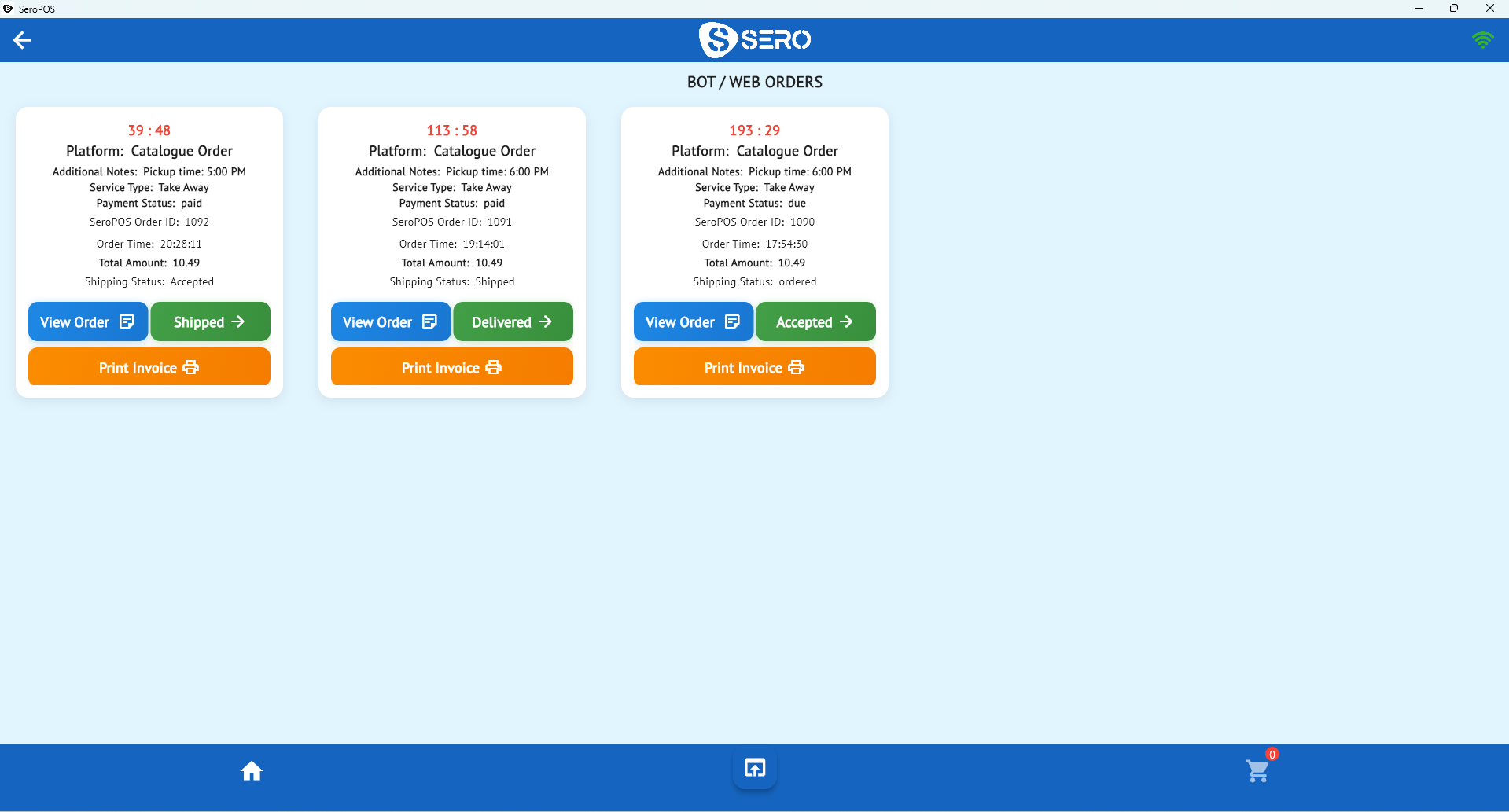
The clearest, most immediate win — especially for pizzerias and any business that loses calls at peak. SeroPOS integrates with Inputly, an AI assistant that answers the phone, takes the order using your live menu, and places it directly into your order queue.
Every missed call is a lost order, so the ROI here is unusually easy to calculate: count the calls you drop on a Friday and multiply by your average phone ticket. Full detail in AI phone ordering for pizza shops.
3. Automated insight surfacing
Rather than you remembering to check twelve reports, the system flags what changed: a product trending up, a category slipping, an unusual void rate. This is the most oversold category — much of it is threshold alerting with a modern name — but genuine pattern detection saves real time.
What's mostly marketing
- "AI-powered reports." Usually a normal report with a chart.
- "AI menu engineering." Sorting items by margin and popularity — useful, but it's a spreadsheet, not intelligence.
- "AI-driven personalization" for a single-location restaurant with a few hundred customers — there isn't enough data for it to mean much.
- "AI fraud detection" on small transaction volumes — again, data-hungry, and mostly rule-based in practice.
None of these are bad features. They're just not reasons to pay a premium tier.
Questions to ask a vendor about AI
- What data does it learn from — my data, or a generic model?
- How much history does it need before predictions are meaningful?
- Can I see the accuracy of past forecasts against what happened?
- Where does my data go, and is it used to train shared models?
- Is it included, or an upsell?
- Can I turn it off and still use the system normally?
Question 4 matters increasingly for privacy and competitive reasons — you're entitled to a clear answer.
Fundamentals still win
The most common AI disappointment comes from switching it on over a broken setup. If your modifiers are a mess, the voice assistant will faithfully take confused orders. If your inventory counts are fiction, forecasting has nothing solid to predict from. If nobody reads the daily reports, automated insights go unread too.
Fix the basics first. Then AI genuinely compounds them.
Where SeroPOS stands
Built-in AI sales forecasting from your own history, Inputly AI voice ordering integration, and automated insight surfacing — included in the platform at $30–$50/month rather than sold as a premium AI tier. See pricing.
Download SeroPOS and try the AI features free for 14 days — no credit card required.